request to quote
Leave Your Message

What Is the Best Pull Down Tap for Global Buyers?

Choosing the best Pull Down Tap for global buyers requires more than comparing finishes, prices, or online ratings. A reliable choice must perform under different water pressures, sink sizes, installation systems, and maintenance conditions. Richard Trethewey, a respected plumbing and heating expert from This Old House, offers a practical reminder: “The faucet has to fit the sink, the user, and the water pressure.” That simple point deserves attention.

A strong Pull Down Tap should provide smooth hose movement, secure spray-head docking, and clear switching between stream and spray modes. Buyers should inspect the hose length, counterweight design, cartridge quality, and connector compatibility. Stainless steel construction may suit busy kitchens, but the coating still needs careful evaluation. Some finishes show fingerprints quickly. Small detail. Big frustration.

Global buyers also need dependable documentation, replacement parts, warranty support, and compliance with local plumbing requirements. A tap that fits a North American countertop may not suit every European or Asian installation. Water-saving claims should be checked against verified flow-rate information, not attractive packaging. This is where many comparisons become shallow.

The best product is not always the most expensive one. It is the one that matches real household habits, local water conditions, and available service support. A family with a deep sink may value a longer pull-out reach. An apartment owner may prioritize compact installation and quieter operation. I would not treat any single ranking as universal. Product quality can change between batches, markets, and suppliers. Careful buyers should request technical drawings, test samples where possible, and confirm after-sales support before placing a large order.

What Is the Best Pull Down Tap for Global Buyers?

Pull-Down Tap Basics and Key Features for Global Buyers

What Is the Best Pull Down Tap for Global Buyers?

A pull-down tap combines a high-arc spout with a flexible spray hose. The spray head usually offers stream and rinse modes. This simple choice affects daily washing, filling, and cleaning tasks. For global buyers, the best model must match local plumbing conditions. Check the inlet size, mounting hole, and available water pressure before ordering. Regional fittings are not always interchangeable.

In kitchen projects, I have found that hose length matters more than appearance. A 60-centimeter hose may suit a compact sink. A deeper workstation sink may need extra reach. Look for a smooth retraction system, a stable counterweight, and a spray head that locks firmly.

Ceramic cartridges can reduce dripping and support precise temperature control. Stainless steel or certified low-lead materials are safer choices for regular water contact. Still, surface finishes can wear faster in coastal or high-humidity areas.

Do not ignore installation details. A thick stone countertop may require a longer fixing stem. Some models need a separate weight clearance beneath the sink. The aerator should be easy to remove for cleaning. Mineral buildup is common. I once selected a stylish tap with weak spray pressure, and the user found it frustrating. That mistake changed my checklist. Product drawings, test reports, warranty terms, and spare-part access deserve equal attention. A pull-down tap should look good, but dependable performance comes first.

How to Compare Tap Materials, Design, and Water Performance

What Is the Best Pull Down Tap for Global Buyers?

For global buyers, the best pull-down tap balances material safety, design, and stable water performance. Stainless steel offers strong corrosion resistance in humid kitchens. Brass provides weight and durability, but buyers should verify its lead-content compliance. NSF/ANSI 61 evaluates materials that contact drinking water. Not every metal alloy performs equally. Plastic spray heads reduce shipping weight, yet low-grade polymers may discolor or crack near heat.

Water pressure changes the buying decision. The U.S. EPA WaterSense Specification for Residential Bathroom Faucets limits certified flow to 1.5 gallons per minute at 60 psi. U.S. federal standards allow kitchen faucets up to 2.2 gallons per minute under the same pressure. A pull-down model rated at 1.8 gallons per minute may feel weak in a low-pressure apartment.

Ask suppliers for test results at 20, 40, and 60 psi. Check both stream and spray modes. A pause button can reduce waste during washing.

Design details reveal practical quality. A ceramic cartridge should operate smoothly without grinding. The hose needs controlled retraction, not a sharp snap. ASME A112.18.1 testing can support mechanical and flow claims.

I would not trust polished photographs alone. In field checks, small leaks often appear around connections after repeated movement. That weakness is easy to miss.

Buyers should request cycle testing, coating reports, installation dimensions, and replacement-part availability before comparing prices.
Which Pull-Down Tap Fits Different Kitchens and Markets

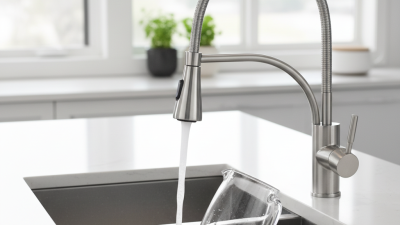
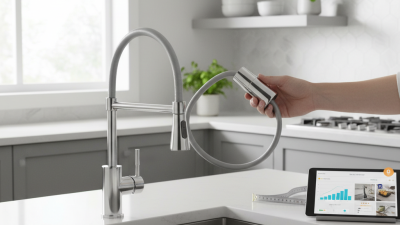
A suitable pull-down tap depends on the kitchen, not only on appearance. Houzz’s 2024 U.S. Kitchen Trends Study reported that 73% of renovating homeowners upgraded their kitchen faucets. That demand reflects practical use. Buyers want flexible rinsing, easy cleaning, and reliable docking after daily cooking.

For large North American kitchens, choose a tall model with a generous hose reach and a deep single-bowl sink. A strong spray pattern helps remove food residue quickly. In compact urban kitchens, a shorter spout can prevent cabinet collisions and water splash. The fit matters more than extra features. For markets with hard water, ceramic cartridges, smooth internal surfaces, and replaceable aerators deserve close inspection. Touch control may feel convenient, but wet hands and irregular maintenance can reduce its value.

Flow rate also changes market suitability. The U.S. EPA WaterSense specification limits bathroom faucet flow, but kitchen models should still be checked against local efficiency rules and buyer expectations. Many efficient kitchen taps use about 1.5 gallons per minute, compared with older 2.2-gallon models. European buyers may expect metric connections and different flow classifications. Always confirm thread size, mounting thickness, hose length, and certification requirements. Field testing shows that a beautiful tap can fail when the pull-down head does not retract smoothly. There is no perfect universal model. Balancing reach, flow, water quality, and service access remains the harder decision.

Global Standards, Installation Needs, and Compatibility Checks

What Is the Best Pull Down Tap for Global Buyers?

Global Standards, Installation Needs, and Compatibility Checks

A pull-down tap should match the buyer’s water system, not just the kitchen design. Check the local certification requirements for drinking-water contact materials. These rules differ across markets and may require specific testing records. A reliable supplier should provide clear documents, not vague claims.

Measure the sink before ordering. Record the mounting-hole diameter, countertop thickness, and available space below the basin. One-hole installation is common, but some kitchens require a deck plate or extra openings. Check the inlet thread size and supplied connectors carefully. A small mismatch can stop installation. It is frustrating.

Water pressure also affects daily use. A spray head may perform poorly in low-pressure apartments. In high-pressure systems, the cartridge and flexible hose need suitable ratings. Confirm the hose length, swivel range, and counterweight position. The weight should move smoothly without striking the cabinet wall.

Material details deserve attention. Stainless steel and certified brass can offer dependable service, but surface appearance alone proves little. Ask for material specifications and regional compliance documents. Some fittings may need adapters, although extra adapters create more leak points. I would not assume universal compatibility. Even experienced buyers sometimes overlook cabinet depth or local thread standards. A short installation trial with the actual fittings can reveal problems before shipment.

Global Pull-Down Tap Compatibility: Common Supply Thread References

The chart compares approximate nominal major diameters for common faucet supply connection formats. G threads are parallel pipe threads referenced by ISO 228-1, while NPSM is a North American straight pipe thread format. Similar nominal sizes are not automatically interchangeable, so buyers should verify thread profile, gender, sealing method, adapter requirements, mounting-hole diameter, deck thickness, and local water-pressure limits before installation.

Reference values are approximate thread major diameters in millimetres. Actual compatibility depends on the complete connection specification and the installation environment.

How to Select a Reliable Pull-Down Tap Supplier Worldwide

What Is the Best Pull Down Tap for Global Buyers?

How to Select a Reliable Pull-Down Tap Supplier Worldwide

The global kitchen faucet market is expanding steadily. Grand View Research projects a compound annual growth rate of about 7% through 2030. This growth attracts new suppliers, but market visibility can mislead buyers. A professional supplier should provide factory details, material specifications, test records, and traceable quality procedures. Request evidence for brass composition, surface coating, cartridge durability, hose retraction, and leak resistance. A polished catalog is not proof.

Check compliance before discussing price. Relevant benchmarks may include ASME A112.18.1, NSF/ANSI 61, EN standards, or local plumbing requirements. EPA WaterSense limits labeled bathroom faucets to 1.5 gallons per minute, compared with the 2.2-gallon federal maximum. This is not a kitchen-faucet certification, but it offers a useful efficiency reference. Suppliers should explain flow rates clearly, without hiding restrictions inside marketing language.

Factory audits reveal details that samples cannot. Inspect assembly lines, incoming-material controls, salt-spray testing, and final inspections. Ask how the supplier handles missing parts or damaged pull-down hoses. Response time matters. So does documentation. The 2024 Houzz U.S. Kitchen Trends Study confirms strong consumer interest in upgraded kitchen fixtures, yet design demand should not replace engineering checks. I would also test several samples over weeks, not days. Small weaknesses often appear later. A reliable supplier accepts reasonable criticism and revises drawings, packaging, or spare-part plans when evidence supports change.