request to quote
Leave Your Message

China Top Door Towel Rack Manufacturers for Global Buyers

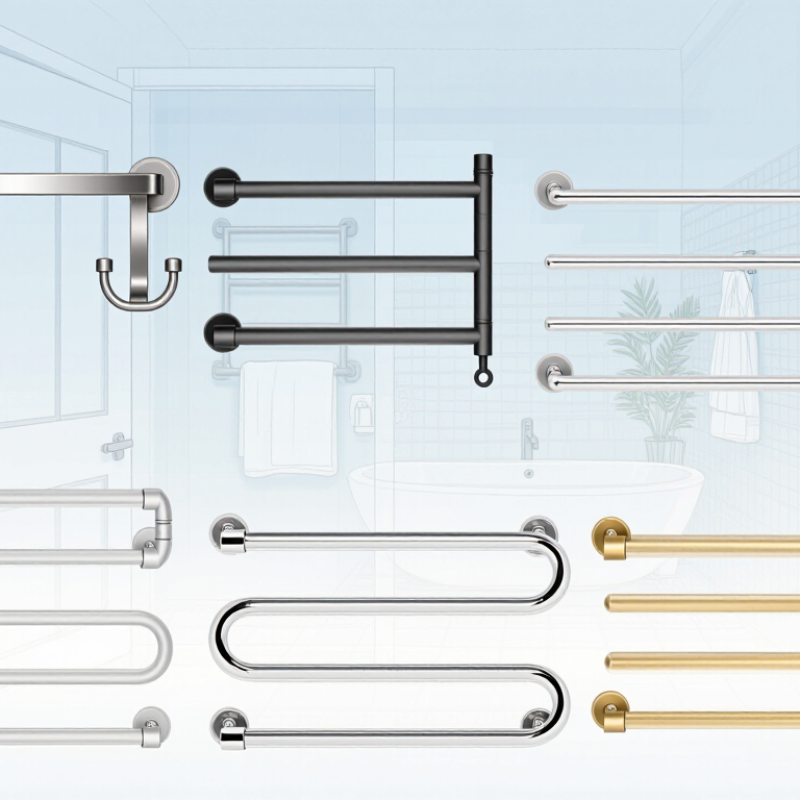
China has become a major sourcing base for Door Towel Rack products, serving hotels, apartments, retailers, and bathroom brands worldwide. Its manufacturers offer stainless steel, aluminum, brass, and coated steel models. Options range from simple over-door hooks to multi-bar racks with adjustable fittings.

David Chen, a bathroom hardware sourcing consultant with 18 years of factory experience, says, “A reliable Door Towel Rack must survive daily moisture before it wins a buyer’s trust.” His comment reflects a practical purchasing truth. Attractive finishes matter, but corrosion resistance matters more. A rack may look excellent under showroom lighting. The real test begins after months of wet towels, steam, and repeated movement.

Experienced global buyers inspect more than product photos. They review material grades, weld quality, mounting strength, packaging, and production consistency. They also request samples before confirming large orders. This step seems obvious. It is still often skipped.

Leading Chinese manufacturers may support OEM designs, private labeling, color customization, and flexible order quantities. However, customization can increase costs, lead times, and quality risks. Buyers should confirm drawings, tolerances, surface treatments, and inspection standards in writing. Some suppliers communicate quickly but document poorly. That weakness deserves attention.

This guide examines China’s top Door Towel Rack manufacturers for global buyers. It considers factory capability, product durability, export experience, certifications, and after-sales responsiveness. No supplier is perfect. Even a strong factory may struggle with unusual finishes or urgent schedules. Careful comparison helps buyers choose a dependable partner, not merely the lowest quotation.
China Top Door Towel Rack Manufacturers for Global Buyers

Understanding Door Towel Racks and Their Global Market Applications

China Top Door Towel Rack Manufacturers for Global Buyers

Understanding a door towel rack starts with its daily environment. It may hang on a bathroom door, cabinet panel, or shower partition. Each location creates different demands for clearance, weight, and moisture resistance. Common materials include stainless steel, aluminum, coated steel, and durable plastics. Stainless steel suits humid rooms, while aluminum keeps the product lightweight. Small details matter. Rounded edges reduce snags on clothing and towels. Protective pads can prevent scratches on painted doors.

Global buyers often use door towel racks in homes, hotels, apartments, dormitories, and healthcare facilities. Hospitality projects may require uniform dimensions across hundreds of rooms. Residential buyers usually prefer quick installation without drilling. Export manufacturers in China commonly support custom lengths, surface finishes, packaging, and mounting options. Experienced suppliers should provide material specifications, load guidance, dimensional drawings, and sample inspections. These records help buyers compare products objectively.

Door thickness varies between markets, so adjustable hooks are useful. A rack that fits one door may wobble on another. This is easy to overlook. Buyers should check hinge clearance, door gaps, and opening direction before ordering. Factory quality checks may include coating adhesion, corrosion resistance, weld appearance, and repeated load testing. Yet testing methods can differ between suppliers. Clear inspection criteria are still necessary. A polished catalog cannot replace a physical sample and careful installation review.


China Top Door Towel Rack Manufacturers for Global Buyers

Understanding Door Towel Racks and Their Global Market Applications

This chart presents an indicative global application mix for door towel racks based on common purchasing scenarios. Residential bathrooms represent the broadest application, while hospitality, rental housing, healthcare, and commercial facilities emphasize corrosion resistance, compact installation, and high-frequency use.

Key Features That Define High-Quality Door Towel Rack Manufacturers

China Top Door Towel Rack Manufacturers for Global Buyers

High-quality door towel rack manufacturers combine practical design with controlled production. Experienced buyers should inspect material certificates, weld consistency, surface finishing, and load-bearing performance. Stainless steel, aluminum, and coated steel each suit different bathroom conditions. A reliable manufacturer should explain these differences clearly.

During factory evaluations, check whether doors open smoothly after installation. The rack should remain stable without scratching the door. Rounded edges, reinforced hooks, and protective pads show attention to daily use. Ask for corrosion testing and repeated load tests, not only attractive samples. Packaging also matters. Individual sleeves, corner protection, and clear assembly instructions can reduce damage during international shipping.

Tips: Request a sample before bulk production. Measure the door gap carefully. Confirm the actual load limit. Review inspection photos and production records. A useful supplier should also provide consistent communication, traceable materials, and realistic delivery schedules. Do not rely only on catalog images. Some samples look excellent, but mass production may reveal uneven coating or loose joints. That possibility deserves honest discussion. Small flaws can become costly returns when thousands of units reach overseas retailers. Suppliers willing to explain limitations often appear more dependable than those promising everything.

How China’s Door Towel Rack Manufacturing Industry Operates

China’s door towel rack manufacturing industry operates through a coordinated supply chain. Metal processors cut stainless steel, aluminum, or zinc alloy parts near production clusters. Separate workshops handle stamping, bending, welding, polishing, and surface finishing.

Many manufacturers offer OEM and ODM production. Buyers usually provide drawings, target dimensions, packaging needs, and expected order volumes. Engineers then prepare samples before mass production begins. A sample may reveal problems with door clearance, hook strength, or coating adhesion. Small details matter.

Factories commonly inspect incoming materials, welded joints, surface quality, and final assembly. Reliable suppliers test load performance and check whether the rack damages a standard door.

Salt-spray testing can support corrosion claims, but test duration and conditions must be verified. Documents should state the actual material grade, coating process, and inspection results.

Production schedules depend on tooling, order quantity, and seasonal capacity. Standard designs may ship faster than customized models. Packaging teams often use molded inserts or corner protection to prevent scratches during export handling. Buyers should confirm carton dimensions and shipping marks early.

In practical sourcing, the lowest quotation is rarely the complete cost. Tooling changes, sample revisions, inspection fees, and damaged goods can alter the final price. Communication can also be uneven. Written specifications reduce confusion, although they cannot replace factory visits or independent inspections. Even experienced buyers sometimes overlook door thickness. That mistake is avoidable.

Steps for Evaluating Chinese Suppliers for International Purchasing

China Top Door Towel Rack Manufacturers for Global Buyers

Evaluating Chinese suppliers requires more than comparing catalog prices. The WTO World Trade Statistical Review 2023 reported a 1.2% decline in global merchandise trade volume. Buyers therefore need tighter control over cost, quality, and delivery risk. Request a factory profile, production photos, export records, and a current product specification sheet. Check whether the supplier manufactures stainless steel, aluminum, or coated steel in-house. A bright showroom proves little.

Ask for samples from the same production line used for bulk orders. Inspect welds, screw threads, wall plates, coating thickness, and packaging corners. A bathroom rack should feel rigid, not hollow or sharply finished. Request salt-spray or corrosion-test results when humid markets are involved. The ISO Survey 2023 recorded more than 1.2 million ISO 9001 certificates worldwide, but certification alone cannot verify daily process discipline. Confirm the certificate number and audit scope independently.

Use a written quotation covering material grade, dimensions, tolerances, carton strength, inspection terms, and replacement procedures. Compare the supplier’s answers across email, video calls, and sample documents. Inconsistencies matter. The lowest offer may exclude testing, stronger packaging, or realistic lead time. I would also order a small trial batch before committing to a container. That step costs time, yet it can reveal loose fittings, uneven plating, or missing instructions. A useful supplier should accept reasonable inspection and explain problems without defensive language. Mistakes still happen. The real test is how clearly they correct them.

China Top Door Towel Rack Manufacturers for Global Buyers - Steps for Evaluating Chinese Suppliers for International Purchasing

Practical supplier-evaluation matrix for door towel racks and over-the-door bathroom storage products. The benchmark figures are commonly used purchasing reference ranges and should be confirmed through samples, documents, and written quotations.

Evaluation Dimension Recommended Benchmark What International Buyers Should Check Required Evidence or Test Method Suggested Weight Score
1–5
Material Grade 304 stainless steel for general bathroom use; 316 stainless steel for higher chloride or coastal environments; steel products should have a specified protective coating. Confirm the exact grade of stainless steel, substrate thickness, coating type, and whether the material is consistent across the rack, hooks, screws, and brackets. Request a material declaration, mill test certificate where applicable, and an independent material-composition test such as XRF for stainless steel. 15% —
Corrosion Resistance For coated metal products, use a neutral salt spray test requirement agreed in the purchase specification. A common buyer-defined range is 24–96 hours, depending on finish and market position. Assess rust resistance around welds, punched holes, edges, screw points, and areas where water may collect. Review a laboratory salt spray report based on ASTM B117 or ISO 9227. The test duration and acceptance criteria must match the specified finish. 12% —
Load Capacity Set a static-load requirement based on the installation design. A practical starting point for a single over-door towel rack is often 5–10 kg, subject to door type and mounting method. Check whether the rack remains attached, level, and deformation-free when loaded. Include wet towels because their weight is higher than dry towels. Request a documented static-load test using the buyer’s specified door thickness, load position, and test duration. Inspect for permanent deformation after unloading. 14% —
Door Compatibility The hook or bracket depth should match the target door thickness. Many over-the-door designs are configured for doors approximately 35–45 mm thick, but the actual range must be confirmed. Verify clearance between the door and frame, hook depth, anti-scratch protection, and whether the door can close without excessive resistance. Approve a dimensional drawing and a physical fit test on representative doors. Measure hook depth, internal clearance, and contact-point thickness. 12% —
Dimensions and Tolerances Critical dimensions should be controlled through an approved technical drawing. Buyers commonly specify tighter tolerances for interfaces and moving or hanging parts than for overall decorative dimensions. Compare product dimensions, bar spacing, hook position, edge radius, and packaging dimensions with the approved sample. Use calibrated calipers, gauges, and a signed inspection checklist. Define critical dimensions and acceptable tolerances before mass production. 8% —
Surface Finish and Safety The surface should be smooth, free from sharp edges, exposed burrs, blistering, peeling, visible rust, and inconsistent plating or paint. Inspect welds, corners, hooks, screw heads, and towel-contact surfaces. Confirm that decorative finishes are uniform under normal lighting. Perform visual inspection, edge and burr checks, coating adhesion testing where relevant, and sample approval under agreed lighting conditions. 10% —
Quality Management A documented quality-management system, preferably supported by a current ISO 9001 certificate issued to the manufacturing site. Check whether incoming materials, in-process production, final inspection, nonconforming products, and corrective actions are controlled. Verify the certificate scope, issuing body, site address, validity period, internal inspection records, and recent corrective-action examples. 10% —
Production Capability The supplier should demonstrate suitable equipment for cutting, bending, stamping, welding, polishing, coating, assembly, and packaging, either in-house or through controlled subcontractors. Evaluate production capacity during peak periods, process stability, tooling ownership, maintenance records, and dependence on outside processors. Review a factory audit, process-flow chart, equipment list, production photos or video, capacity statement, and subcontractor-control procedure. 8% —
Sample and Tooling Policy A clear sample timeline and written tooling quotation. Prototype charges and tooling ownership should be stated before development begins. Confirm whether sample costs are refundable, how many revisions are included, and who owns molds, dies, jigs, and approved drawings. Obtain a signed sample-development schedule, tooling agreement, revision procedure, and approved golden sample before mass production. 6% —
MOQ and Commercial Terms MOQ varies by material, finish, packaging, and whether new tooling is required. Compare the complete landed-cost structure rather than unit price alone. Review MOQ, price breaks, tooling fees, sample fees, payment terms, quotation validity, spare-part policy, and cost changes caused by material fluctuations. Request a formal quotation showing product price, tooling, packaging, inspection, documentation, freight terms, and all one-time charges separately. 5% —
Lead Time and Delivery Reliability For standard products, production lead times are commonly quoted in weeks rather than days; customized tooling and finishes require additional development time. Compare sample lead time, first-order production time, repeat-order lead time, holiday impact, capacity reservation, and shipment punctuality. Request historical on-time-delivery data, a production schedule, order milestones, and a written delay-notification procedure. 6% —
Packaging and Export Readiness Packaging should protect polished or coated surfaces and withstand normal international handling. Carton dimensions and gross weight must support freight planning. Check individual protection, inner boxes, master-carton strength, moisture protection, barcode or label requirements, and palletization if required. Conduct a packaging-drop or transit simulation appropriate to the buyer’s logistics route and inspect cartons for compression, abrasion, and moisture damage. 6% —
Pre-Shipment Inspection Use an agreed inspection level and acceptance criteria before shipment. AQL sampling should be defined in the purchase contract rather than assumed. Inspect appearance, dimensions, assembly, load performance, corrosion protection, accessories, labeling, carton quantity, and random packed units. Use a buyer-approved inspection checklist and an independent inspection report. Shipment release should depend on documented results. 4% —
After-Sales Support A written process should cover defect claims, replacement parts, corrective actions, response times, and warranty responsibilities. Evaluate response speed, technical communication, replacement policy, claim documentation, and willingness to analyze root causes. Request warranty terms, claim forms, service-level expectations, spare-part availability, and sample corrective-action reports with confidential details removed. 4% —

Suggested decision rule: Multiply each criterion score by its weight, then compare the weighted totals. Do not approve a supplier solely on price; require satisfactory results for material authenticity, door compatibility, load capacity, corrosion resistance, and pre-shipment inspection.

Export, Quality, and Compliance Factors Global Buyers Should Check

For global buyers, a Chinese door towel rack factory should be judged beyond catalog photos. Export readiness starts with stable material records, accurate HS classification, and documented packing tests. The World Stainless Association reported 58.4 million tonnes of stainless crude steel production in 2023. That scale supports supply availability, but it does not guarantee corrosion resistance. Ask for the exact grade, surface treatment, salt-spray method, and batch traceability. Small details matter near a humid bathroom door.

Quality control should follow measurable checkpoints. Check weld penetration, mounting-hole alignment, load capacity, coating adhesion, and sharp-edge protection. Request third-party test reports, but verify the laboratory’s accreditation and report number. The ISO Survey 2023 recorded more than 1.2 million ISO 9001 certificates worldwide. Certification is useful evidence, not a substitute for product inspection. A polished certificate can hide inconsistent batches. Pre-shipment sampling remains wise, even when previous orders performed well.

Compliance depends on the destination. EU buyers should screen metal coatings, plastics, and packaging against REACH obligations, including the 0.1% article threshold for substances of very high concern. Consumer-product documentation may also reflect the EU General Product Safety Regulation, applicable from December 13, 2024. For ocean shipments, align carton strength, pallet size, marks, and Incoterms with the forwarder. UNCTAD’s Review of Maritime Transport 2024 confirms that over 80% of world trade by volume moves by sea. Delivery assumptions can still fail. Confirm inspection scope, corrective-action timing, and rework responsibility before signing.