


Finding Your Match: A Guide to Different Basin Faucet Features
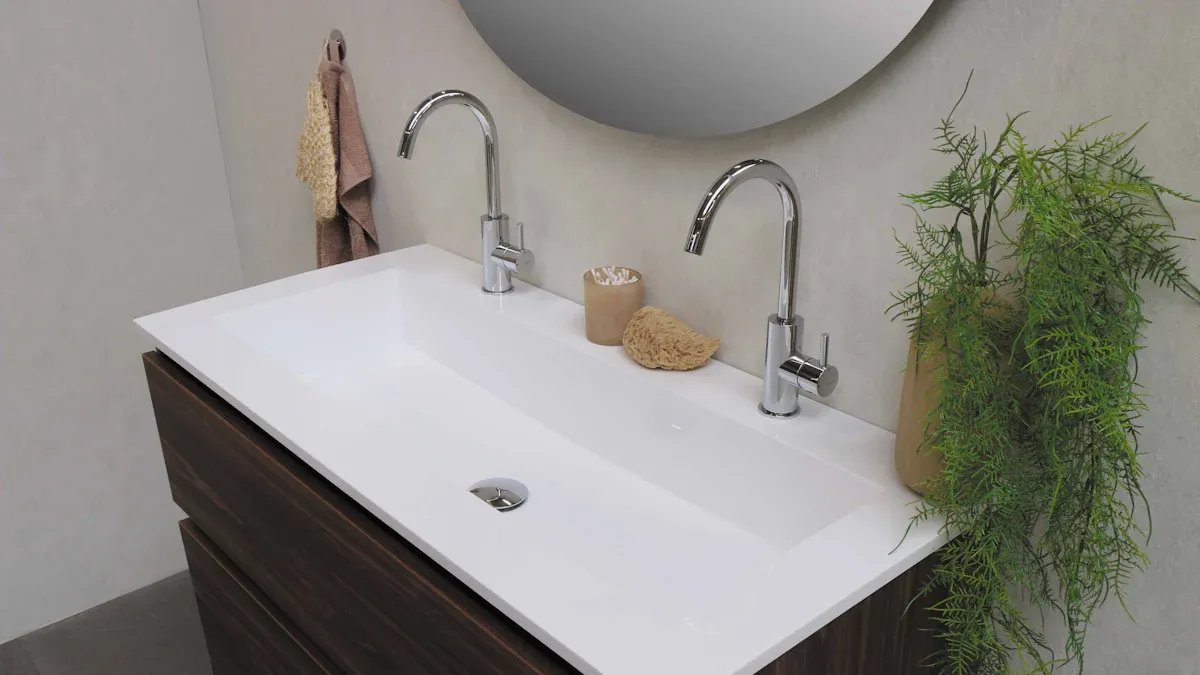
Selecting the right Basin Faucet perfectly balances style, functionality, and durability for a bathroom. Understanding its features is crucial for a successful bathroom renovation or upgrade. Homeowners consider essential factors for a long-lasting and aesthetically pleasing fixture. AnEco-Friendly Basin Faucet also contributes to water conservation. This guide helps in making an informed decision.
Key Takeaways
- Choose a faucet type that fits your sink and bathroom style.
- Consider handle styles for ease of use and bathroom look.
- Select durable materials and finishes for a long-lasting faucet.
- Understand valve types for good performance and easy fixes.
- Look for water-saving features to help the environment and save money.
- Make sure the faucet size matches your sink for comfort and to prevent splashes.
- Check the warranty and customer support for peace of mind.
Understanding Basin Faucet Types and Mounting Options
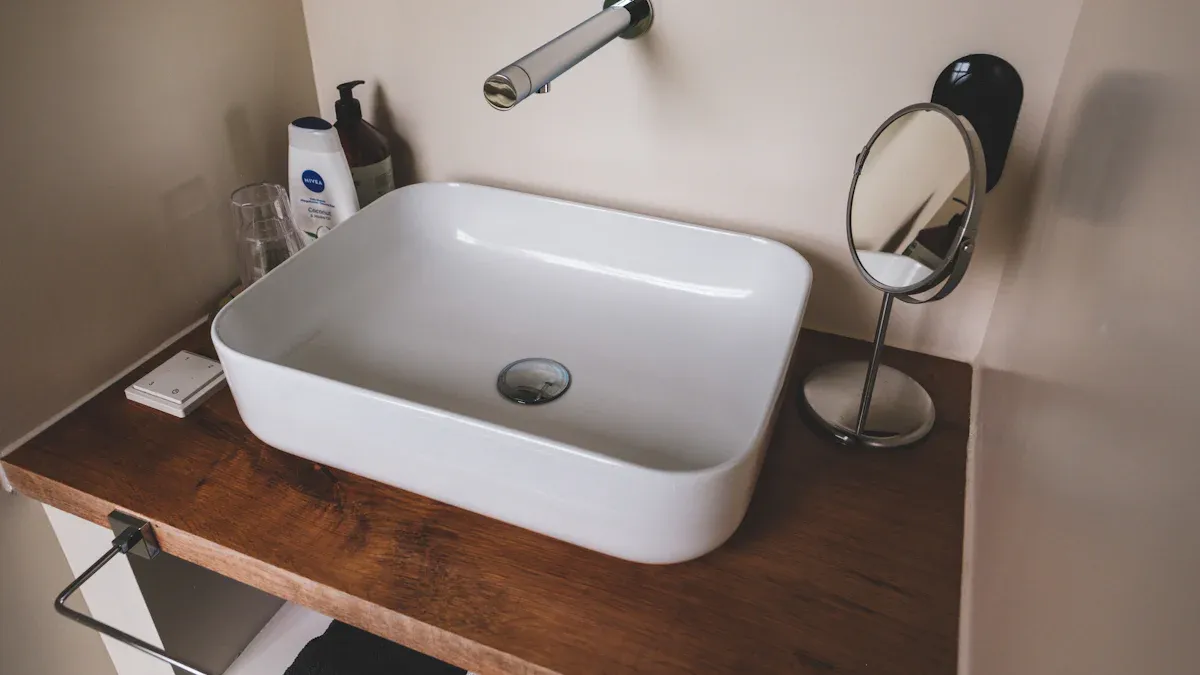
Selecting the correct faucet type and mounting option is fundamental for both the functionality and aesthetic appeal of a bathroom. Different configurations cater to various sink designs and personal preferences. Understanding these distinctions helps homeowners make an informed choice for their space.
Single-Hole Basin Faucets
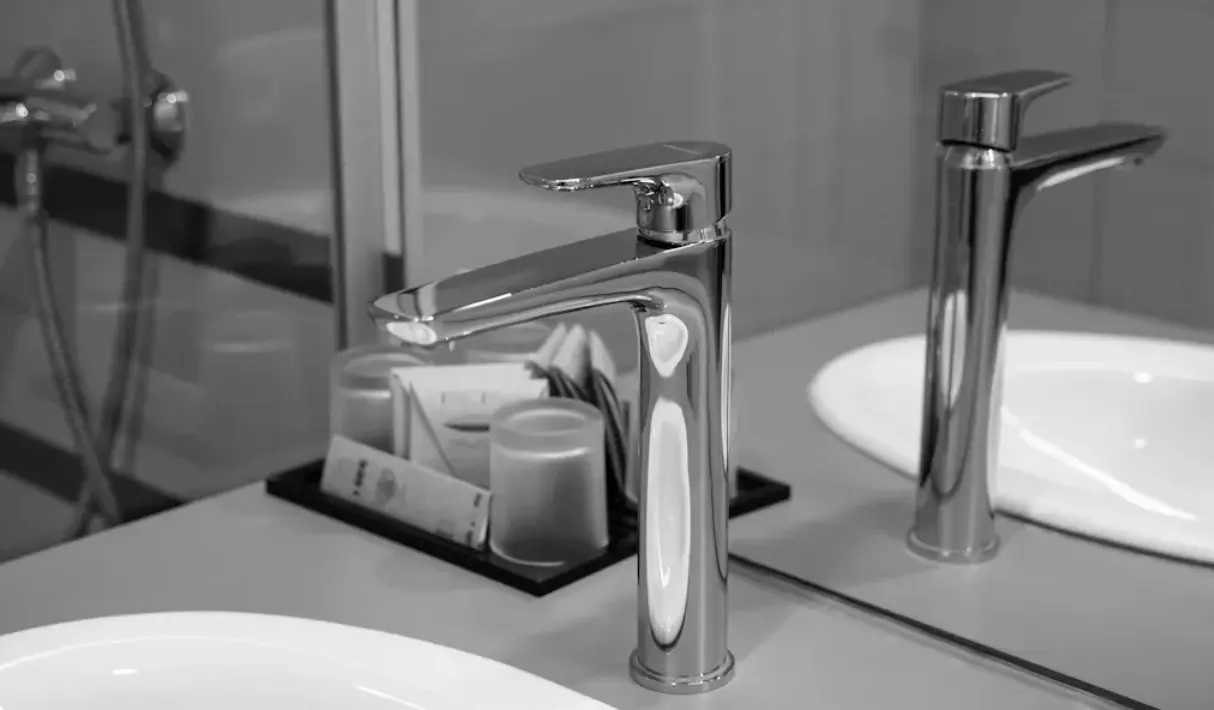
Single-hole faucets offer a streamlined appearance, integrating the spout and handle into one unit.
Design Versatility
These faucets provide significant design versatility. Their minimalist profile complements contemporary and modern bathroom styles. Designers often choose them for their clean lines and uncluttered look, which enhances the overall aesthetic of the basin area. This type of faucet easily adapts to various basin shapes and sizes.
Installation Simplicity
Installers find single-hole faucets relatively simple to install. The process typically begins with turning off the water supply. They then remove the lock nut from the Faucet Body and attach flexible water feed tubes. If an escutcheon plate is part of the design, they place it over the mounting hole. The installer threads the faucet through the countertop or sink mounting hole. From underneath the sink, they secure the faucet by threading a washer and lock nut onto the tailpiece, ensuring proper alignment before tightening. This straightforward installation makes single-hole faucets a popular choice for many homeowners.
Widespread Basin Faucets
Widespread faucets feature separate components for the hot handle, cold handle, and spout. Each piece mounts independently on the sink or countertop.
Adjustable Spacing
A key advantage of widespread faucets is their adjustable spacing. This design allows for flexibility in positioning the handles and spout, accommodating various sink hole configurations. Homeowners can customize the distance between the components, typically ranging from 8 to 16 inches, to suit their specific basin and personal comfort.
Elegant Aesthetics
Widespread faucets offer elegant aesthetics, contributing significantly to a bathroom's overall style. When considering these faucets, homeowners evaluate several design elements. The faucet should complement the bathroom's style, whether modern, traditional, or transitional. Finish options like matte black, polished chrome, brushed nickel, or oil-rubbed bronze balance appearance with maintenance needs. Spout height and reach are crucial for comfortable use and adequate clearance for the sink size. The handle type, such as lever, cross, or knob, also impacts both style and ease of use. These considerations ensure the widespread faucet enhances the bathroom's sophisticated look.
Centerset Basin Faucets
Centerset faucets combine the spout and handles onto a single base unit, making them a compact and practical option.
Compact Design for Smaller Basins
Centerset faucets are ideal for smaller basins or bathrooms with limited counter space. Their integrated design means they occupy less surface area, providing a neat and tidy appearance. This compact form factor makes them a practical solution for powder rooms or secondary bathrooms where space efficiency is a priority.
Standard Hole Configurations
Centerset faucets fit standard hole configurations commonly found in many bathroom sinks. These faucets are designed to fit into three holes on a standard bathroom sink. The typical distance between the handles is 4 inches. This standardized measurement ensures compatibility with a wide range of pre-drilled sinks, simplifying the selection and installation process for homeowners.
Wall-Mounted Basin Faucets
Wall-mounted faucets emerge directly from the wall above the basin. This design offers a distinct aesthetic and practical advantages.
Space-Saving Benefits
Wall-mounted faucets significantly enhance counter space. They free the area around the sink from clutter, creating a clean and minimalist look. This design choice is particularly beneficial in smaller bathrooms or powder rooms where every inch of counter space is valuable. Homeowners also find cleaning the countertop easier without a faucet base obstructing the surface. This contributes to a more streamlined and hygienic bathroom environment.
Specific Plumbing Requirements
Installing wall-mounted faucets requires specific plumbing modifications. These fixtures demand careful planning during the bathroom construction or renovation phase. Installers must run plumbing lines inside the wall. They need to install hardware early in construction while the wall is exposed. Plumbing pipes must be precisely positioned. They cannot be easily moved once installed. Careful planning and spacing estimation are crucial for correct alignment. A stable, waterproof backer board is also required for the wall surface. Professional installation or assistance from a plumber may be necessary. This ensures proper positioning, alignment, and sealing to prevent leaks. Pipes must be positioned so the tap is centered over the sink location.
Bridge Basin Faucets
Bridge faucets feature a distinctive design where hot and cold water lines connect above the counter via a visible horizontal pipe. This creates a unique visual element.
Distinctive Vintage Appeal
Bridge faucets offer a distinctive vintage appeal. Their design often evokes a sense of classic elegance or rustic farmhouse charm. The exposed bridge connecting the two handles to the spout becomes a focal point in the bathroom. This style complements traditional, transitional, and even some industrial-themed decors. Homeowners choose bridge faucets to add character and a touch of historical authenticity to their bathroom design.
Unique Installation Considerations
Bridge faucets present unique installation considerations. Unlike single-hole or centerset models, they typically require two or three separate holes in the countertop or sink. One hole accommodates each handle, and another supports the spout. The bridge itself connects these components above the surface. Installers must ensure precise drilling and alignment for a secure and aesthetically pleasing fit. The visible plumbing connection also means installers must pay attention to the finish and condition of the bridge component. This ensures it matches the overall fixture and contributes to the desired look. This type of Basin Faucet requires careful planning for both plumbing and countertop preparation.
Exploring Basin Faucet Handle Styles and Control Mechanisms
The choice of faucet handles significantly impacts both the functionality and aesthetic appeal of a bathroom. Different handle styles offer unique control mechanisms, influencing ease of use and contributing to the overall design theme. Understanding these variations helps homeowners select the best option for their needs.
Lever Handle Basin Faucets
Lever Handle Faucets are a popular choice due to their modern design and user-friendly operation. They provide efficient water control with minimal effort.
Single-Lever Operation
Single-lever faucets integrate hot and cold water control into one handle. Users adjust water temperature and flow with a simple movement. Pushing the lever up or down controls water volume, while moving it left or right adjusts temperature. This design offers intuitive and quick operation. Lever handles simplify turning water on and off. They only require a push of the hand, unlike round handles which necessitate gripping. This is especially advantageous for individuals with joint inflammation, hand injuries, or when hands are full. These faucets offer smooth and intuitive control, saving time and effort compared to stiff knobs. They are also safer for kids, as lever handles are easier for children to operate than traditional knobs, encouraging handwashing without assistance.
Dual-Lever Control
Dual-lever faucets feature two separate levers, one for hot water and one for cold. This configuration allows for precise temperature blending. Users can fine-tune the water temperature by adjusting each lever independently. This design often appears in more traditional or transitional bathroom styles, offering a classic look with modern functionality.
Knob Handle Basin Faucets
Knob handle faucets offer a timeless appeal, often found in traditional or vintage-inspired bathrooms. They provide a distinct tactile experience.
Classic Design
Knob handle faucets feature a classic design. They often present a rounded, knob-like shape. These handles are typically simple and affordable. In a two-handle 4-inch centerset configuration, a knob handle mounts on each side of the water spout. They are available in various materials, including metal, plastic, and ceramic. This variety allows them to complement diverse bathroom decors.
Ergonomic Grip
Knob handles require a twisting motion for operation. Users grip and turn the knob to control water flow and temperature. While some find this less ergonomic than lever handles, many appreciate the firm grip and precise control it offers. The design provides a secure hold, which can be beneficial for certain users.
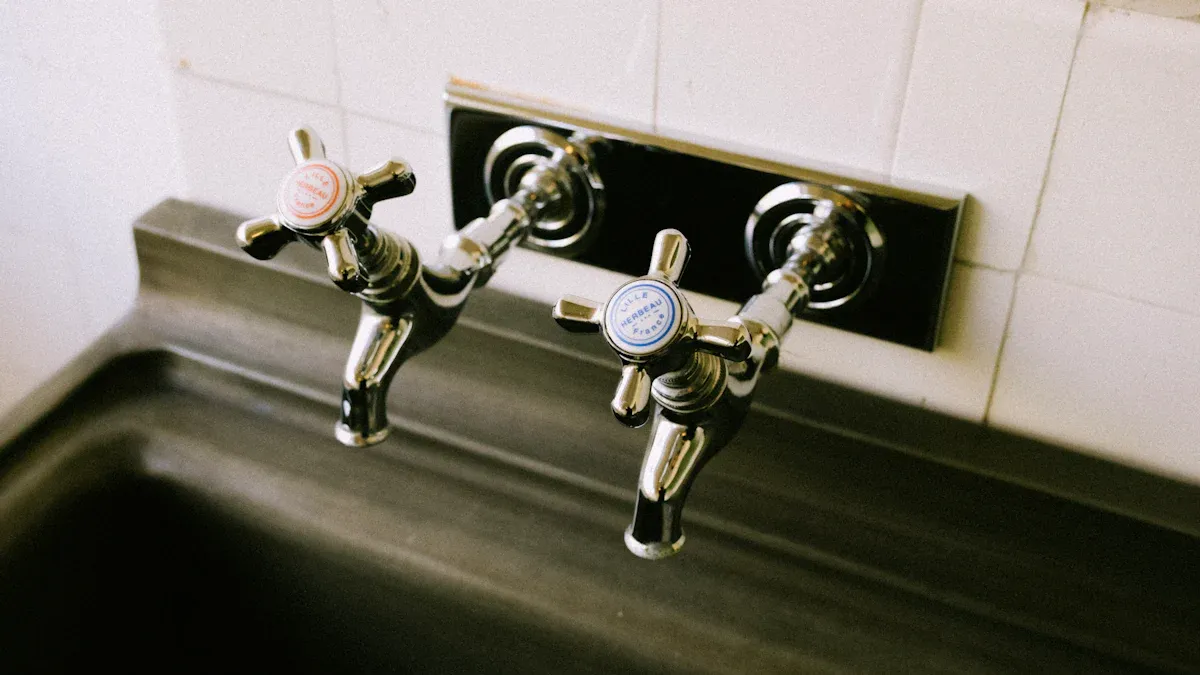
Cross Handle Basin Faucets
Cross Handle Faucets are a hallmark of traditional bathroom design. Their distinctive shape adds character and elegance to any basin area.
Traditional Aesthetic
Cross Handle Faucets feature a traditional aesthetic. They have a four-pronged design resembling a cross. This style evokes a sense of classic charm and sophistication. Designers often choose them for period-style bathrooms or those aiming for a vintage look. They serve as a decorative element, enhancing the overall design.
Precise Water Control
Cross handles offer precise water control. Users turn the handle to adjust water flow and temperature. The distinct shape provides a good grip, allowing for accurate adjustments. This control mechanism ensures users can easily achieve their desired water settings. This Basin Faucet type combines historical design with reliable performance.
Push-Button Basin Faucets
Push-button Basin Faucets represent a modern approach to water control. They offer a sleek design and straightforward operation.
Modern Functionality
Push-button faucets bring modern functionality to the bathroom. These faucets often provide two-way flow and hot and cold water capability. Many models feature single-hole installation, simplifying the setup process. Some designs even include a pull-out sprayer with two function spray options: stream or spray. Manufacturers build these faucets with a durable solid brass body, ensuring longevity. Their contemporary design effectively utilizes modern technology for an enhanced user experience.
Water Flow Activation
Users activate water flow in push-button faucets by pressing a button or a series of buttons. One button might turn the water on, while another turns it off. Some designs use a single button to cycle through on and off states. This mechanism offers a clean, minimalist look. It also provides a distinct tactile feedback for users.
Touchless Basin Faucets
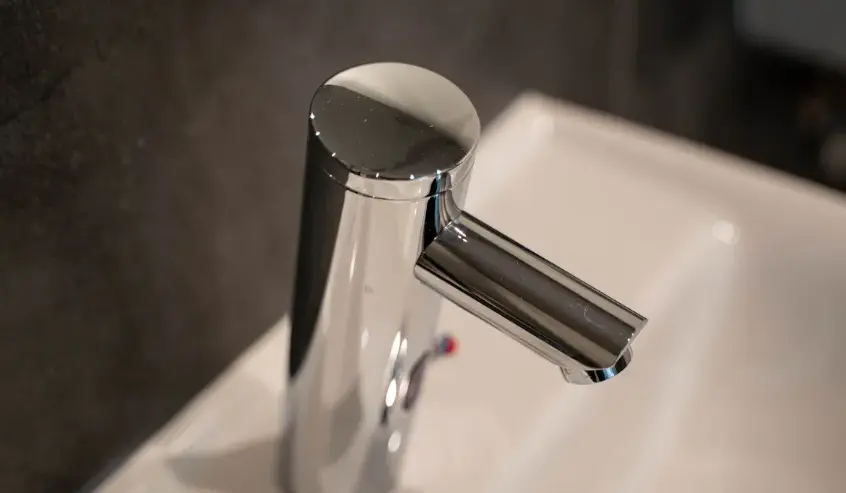
Touchless Basin Faucets offer advanced hygiene and convenience. They operate without physical contact, reducing germ spread.
Sensor Technology for Hygiene
Touchless Basin Faucets incorporate advanced sensor technologies for enhanced hygiene. In commercial settings, these often include programmed faucets, touch sensors, and hands-free metering. Some touchless models employturbine-powered technology. A small turbine integrates into the faucet. It generates power from the flowing water. This generated energy then stores in a battery pack, which powers the faucet's sensor. This enables its touchless operation.
Touchless basin faucets commonly utilize infrared sensors. A transmission diode emits infrared light pulses. When a user places hands under the spout, these light pulses reflect off the hands. The faucet then converts these reflections into an electrical signal. This signal subsequently triggers the valve to open, allowing water to flow. The water flow ceases once the hands are removed from the sensor's range. The diode stops receiving the reflected light. This technology ensures a hygienic experience.
Convenience and Water Saving
Touchless faucets offer significant convenience. Users do not need to touch any handles, which is ideal when hands are dirty. This feature also contributes to water saving. The water only flows when needed, stopping automatically when hands move away. This reduces unnecessary water waste compared to traditional faucets.
Basin Faucet Materials, Finishes, and Durability
The materials and finishes of a Basin Faucet significantly influence its longevity and aesthetic appeal. Homeowners must understand these characteristics to make an informed choice. The right selection ensures both durability and a cohesive bathroom design.
Common Basin Faucet Materials
Solid Brass Construction
Solid brass is a premium material for faucet construction. It offers exceptional durability and resistance to corrosion. Many manufacturers prefer brass for its robust nature.
| Pros | Cons |
|---|---|
| Durability: Brass withstands daily wear and tear, ensuring a long lifespan. | Higher Cost: Brass faucets are generally more expensive than those made from other metals. |
| Corrosion Resistance: Solid brass does not rust, maintaining its quality and appearance over time. | Regular Cleaning for Luster: They require consistent cleaning to maintain their shine and prevent dullness or spots. |
| Antimicrobial Properties: The copper content in brass helps reduce germ spread. | Patina Development (for unlacquered brass): Unlacquered brass develops a patina, which some dislike if they prefer the original shiny look. |
| Heat Resistance: Brass faucets efficiently handle both hot and cold water without degradation. | |
| Low Maintenance: Regular cleaning with a soft cloth and water keeps brass faucets looking good. | |
| Aesthetic Versatility: Available in various finishes, allowing for diverse design choices. | |
| Long-term Value: Longevity and durability make brass a cost-effective investment, potentially adding to home resale value. |
Zinc Alloy Components
Manufacturers often use zinc alloy in more budget-friendly faucets. It is lighter and less expensive than brass. However, zinc alloy is generally less durable and more prone to corrosion over time.
Stainless Steel Options
Stainless steel offers a modern look and excellent corrosion resistance. It is a durable material, often chosen for contemporary bathroom designs. Stainless steel faucets resist rust and maintain their appearance well.
Popular Basin Faucet Finishes
Polished Chrome Finish
Polished chrome is a classic and widely popular finish. It offers a bright, reflective surface. Polished chrome is known for its durability, ease of cleaning, and resistance to corrosion, making it a practical choice for bathrooms. This finish tends to show fingerprints and water spots, but users can easily wipe them away to restore its shine. Polished chrome faucets are considered durable, featuring a layer of chrome plating over nickel and copper, all on a solid brass base.
Brushed Nickel Finish
Brushed nickel provides a subtle, matte appearance. It resists fingerprints and water spots better than polished chrome. This finish offers a warm, understated elegance.
Matte Black Finish
Matte black finishes offer a bold, contemporary statement. They create a striking contrast in many bathroom settings.
- Matte black faucets highlight dust, limescale, shaving foam, or makeup residue, requiring more frequent wipe-downs.
- They may fade or turn grey over time. Prolonged exposure to hard water, cleaning agents, or sunlight can cause fading, especially with lower-quality coatings.
- The matte surface can scratch easily. These faucets are susceptible to scratches from rings, zippers, or abrasive sponges, which are visible and hard to fix.
- They require careful cleaning. Harsh products like bleach, abrasive pads, or acidic cleaners can damage the finish, necessitating mindful maintenance.
- For cleaning, use a microfiber cloth for daily wiping to avoid scratches and streaks. Avoid harsh chemicals; use mild soap and warm water, or diluted white vinegar for limescale (test first). Wipe dry after each use with a soft towel to prevent visible water spots. Occasionally polish with a small amount of olive oil on a soft cloth to create a protective layer and enhance color.
Oil-Rubbed Bronze Finish
Oil-rubbed bronze features a dark, rich tone with subtle copper undertones. It provides a rustic or traditional aesthetic. This finish often develops a unique patina over time.
Polished Brass Finish
Polished brass offers a bright, golden appearance. It brings a luxurious and traditional feel to a bathroom. This finish requires regular polishing to maintain its shine.
Basin Faucet Finish Durability and Maintenance
Resistance to Tarnish and Corrosion
High-quality finishes resist tarnish and corrosion effectively. Manufacturers apply these finishes using advanced techniques. This ensures the faucet maintains its appearance over many years.
Cleaning and Care Guidelines
Proper cleaning extends the life of any faucet finish. Users should avoid abrasive cleaners and harsh chemicals. Mild soap and water with a soft cloth are usually sufficient. Drying the faucet after each use prevents water spots.
Longevity Expectations
The longevity of a faucet finish depends on its material quality and maintenance. Premium finishes on durable materials like solid brass can last for decades. Regular care significantly contributes to this extended lifespan.
Internal Mechanics: Basin Faucet Valve Types Explained
The internal valve dictates a Basin Faucet's performance, durability, and ease of maintenance. Understanding these mechanisms helps consumers choose a reliable and long-lasting fixture. Different valve types offer distinct advantages in terms of control and longevity.
Ceramic Disc Valves for Basin Faucets
Ceramic disc valves represent a modern standard in faucet technology. They feature two polished ceramic discs that slide against each other.
Durability and Reliability
Ceramic disc valves offer exceptional durability and reliability. Manufacturers craft these discs from extremely hard ceramic material. They resist wear and tear from daily use. This robust construction ensures a long lifespan for the faucet. Users experience smooth, consistent operation for many years.
Leak Prevention Technology
These valves excel in leak prevention. The two ceramic discs create a watertight seal when closed. They precisely align to control water flow and temperature. This design eliminates the need for washers, which often degrade and cause leaks in older faucet types. The tight seal prevents drips and ensures efficient water usage.
Compression Valves for Basin Faucets
Compression valves represent the oldest and most traditional faucet valve design. They operate by compressing a rubber washer against a valve seat.
Traditional Design
Compression valves feature a straightforward, traditional design. Users turn a handle to lower a stem, which presses a rubber washer onto a valve seat. This action stops the water flow. They typically have separate handles for hot and cold water. This design has been common in homes for many decades.
Maintenance Needs
Compression valves require more frequent maintenance compared to newer valve types. Washers wear out over time, leading to leaks. The valve seat can also corrode or become damaged, further contributing to drips. Handles can stiffen due to residue buildup or issues with the washer. Regular replacement of these components helps maintain the faucet's functionality.
Cartridge Valves for Basin Faucets
Cartridge valves offer a balance of modern functionality and straightforward repair. They contain all the moving parts within a single, replaceable cartridge.
Functionality and Repair
Cartridge valves provide smooth and precise control over water flow and temperature. They often feature a single handle that moves up and down for volume and left to right for temperature. When a cartridge valve malfunctions, users can easily replace the entire cartridge unit. This simplifies repairs, often requiring only a few tools and minimal plumbing expertise.
Material Variations
Manufacturers produce cartridge valves using various materials. Plastic cartridges are common in more affordable faucets. They offer basic functionality. Ceramic cartridges, similar to ceramic disc valves, provide enhanced durability and smoother operation. Brass cartridges offer superior strength and longevity, often found in higher-end fixtures. Each material choice impacts the valve's performance and expected lifespan.
Ball Valves for Basin Faucets
Ball valves represent an earlier form of single-handle faucet technology. They use a rotating ball to control water flow and temperature. This design offers a distinct operational experience.
Single-Handle Operation
Ball valves are primarily known for their single-handle operation. Users manipulate one handle to control both the water volume and temperature. Moving the handle up or down adjusts the water flow. Shifting it left or right changes the water temperature. This intuitive control allows for quick and easy adjustments. The single-handle design also contributes to a cleaner aesthetic on the basin. This makes them a popular choice for many homeowners seeking simplicity.
Internal Components
The internal components of a ball valve are crucial for its function. A hollow, rotating ball sits inside the faucet body. This ball has ports that align with the hot and cold water inlets. It also has an outlet for the mixed water. The ball itself is typically made from chrome-plated brass or stainless steel. This material choice ensures durability and resistance to corrosion.
Spring-loaded rubber seals or O-rings surround the ball. These seals create a watertight connection between the ball and the faucet body. They prevent leaks and ensure smooth operation. When a user moves the handle, it rotates the ball. This rotation changes the alignment of the ball's ports with the water inlets. This action controls the amount of hot and cold water mixing. It also regulates the overall water flow.
The design of ball valves means they have more internal parts than ceramic disc or cartridge valves. This complexity can sometimes lead to more wear over time. However, their robust construction often provides reliable performance. Manufacturers design these components for precise water control. They ensure a consistent user experience. Regular maintenance, such as replacing worn seals, can extend the faucet's lifespan.
Advanced Basin Faucet Features and Considerations
Homeowners often look beyond basic functionality when selecting a Basin Faucet. Advanced features enhance convenience, promote sustainability, and ensure accessibility. Understanding these options helps consumers make a well-rounded decision for their bathroom.
Water Efficiency in Basin Faucets
Water conservation is a growing concern. Faucet manufacturers offer features that reduce water consumption without sacrificing performance.
EPA WaterSense Certification
The U.S. Environmental Protection Agency (EPA) developed the WaterSense program to identify water-efficient products. All high-efficiency bathroom sink faucets and aerators undergo testing and certification by an independent, EPA-approved licensed certifying body. Manufacturers apply the WaterSense label only after these bodies certify products meet WaterSense criteria for performance and efficiency. Certified products are independently verified to be at least 20 percent more water-efficient than standard products while maintaining equal or superior performance. WaterSense-certified faucets meet specific flow rate requirements:
- Maximum flow rate: 1.5 gallons per minute (gpm) at 60 pounds per square inch (psi).
- Minimum flow rate: 0.8 gpm at 20 psi. This certification applies to bathroom sink faucets and aerators intended for private use.
Gallons Per Minute (GPM) Ratings
GPM ratings indicate a faucet's water flow rate. Water-efficient faucets deliver a maximum flow rate of 1.5 gallons per minute (GPM). This is based on world conservation group standards. Faucets with a 1.5 GPM flow rate, 30% less than the standard 2.2 GPM, can earn the EPA's WaterSense label. For public lavatory faucets, the American Society of Mechanical Engineers A112.18.1/Canadian Standards Association B125.1 Plumbing Supply Fittings specifies a maximum flow rate of 0.5 GPM. Private lavatory faucets, like those in residential settings, should have a maximum flow rate of 1.5 GPM for WaterSense labeling.
Basin Faucet Spout Height and Reach
The dimensions of a faucet's spout significantly impact its usability and aesthetic integration with the sink.
Compatibility with Basin Size
Matching spout height and reach to the basin size prevents splashing and ensures comfortable use. A high-arc spout with a shallow sink can cause splashing. A low-arc spout with a deep sink can make handwashing awkward. A longer reach ensures water flows into the sink, even with larger basins. However, a spout reach that is too long can cause backsplash. Vessel sinks require specific faucet dimensions due to their height. Wall-mounted faucets need precise measurements for alignment. Deeper sinks pair well with higher spouts, while shallow sinks benefit from lower spouts to minimize splashing.
| Faucet Type | Height/Reach | Ideal For | Considerations |
|---|---|---|---|
| Faucet Height | |||
| Low Arc | Under 8 inches | Small sinks, compact bathrooms | Less splash, limited washing space |
| Mid Arc | 8-12 inches | Most sink types | Balanced space and splash minimization |
| High Arc | Over 12 inches | Vessel sinks, deep basins | Ample space, may cause more splash with shallow sinks |
| Spout Range | |||
| Short Reach | Under 4 inches | Small sinks, tight spaces | Limited versatility |
| Medium Reach | 4-8 inches | Standard and most medium-sized sinks | Good balance of functionality and aesthetics |
| Long Reach | Over 8 inches | Large sinks, double basins | Ensures water reaches all areas, may require more installation space |
User Comfort and Functionality
Faucet dimensions directly affect user comfort. For frequent filling of large containers or hair washing, a high-arc faucet is beneficial. For everyday use, a mid-arc faucet offers versatility without excessive splash. Homeowners must also ensure sufficient clearance between the faucet and any overhead shelves or mirrors.
ADA Compliance for Basin Faucets
The Americans with Disabilities Act (ADA) sets standards for accessibility, ensuring faucets are usable by individuals with diverse needs.
Accessibility Standards
ADA-compliant faucets must be easy to operate. They should not require excessive force or complex movements. Operation must be possible with one hand, avoiding tight grasping, pinching, or twisting of the wrist. Manual faucets require no more than five pounds of force. Controls should be placed within easy reach, typically no more than 20 inches from the front edge of the sink. Faucets should allow for 27 inches of knee clearance between the floor and the underside of the mounting surface. Operating parts cannot be higher than 48 inches from the ground or lower than 15 inches. If equipped with an automatic shutoff, the faucet must remain open for at least 10 seconds.
Lever Handle Requirements
Lever-operated, push-type, touchless, or electronically controlled faucets are preferred for ADA compliance. Lever handles are particularly favored because they meet the requirement for one-hand operation without needing tight grasping or twisting.
Integrated Sprayers and Pull-Down Spouts in Basin Faucets
Modern Basin Faucet designs often include integrated sprayers and pull-down spouts. These features significantly enhance the utility of the fixture. They offer increased flexibility for various tasks.
Enhanced Functionality
Integrated sprayers and pull-down spouts provide users with enhanced functionality. They allow for easier cleaning of the sink basin. Users can direct water flow to rinse away toothpaste or debris from all corners. These features also simplify tasks like washing hair in the sink or filling tall containers. The extended reach and flexible hose make these activities more convenient. This versatility transforms a standard faucet into a multi-purpose tool for the bathroom.
Seamless Design Integration
Manufacturers design these advanced features for seamless integration. When not in use, the sprayer or spout retracts neatly into the faucet body. This maintains a clean and uncluttered aesthetic. The design ensures that the added functionality does not compromise the overall visual appeal of the faucet. Modern engineering allows for smooth operation and a cohesive look.
Temperature Limiting Devices in Basin Faucets
Temperature limiting devices are crucial safety components in modern faucets. They protect users from accidental burns. These devices ensure water temperatures remain within a safe range.
Safety Features
Water Temperature Limiting Devices restrict the temperature of hot or tempered water supplied to fixture fittings. This includes sinks and lavatories. Their primary safety feature reduces the risk of scalding. They ensure mixing with cold water occurs at the point of use. This provides effective scald protection.
Scald Prevention
These devices actively prevent scalding by controlling the water temperature. Thermostatic Mixing Valves (TMVs) are a type of anti-scald device.
- They use an internal thermostat to blend hot and cold water to a preset, safe temperature.
- TMVs maintain a stable temperature even with changes in water pressure. This prevents hot water surges.
- They are ideal for bathroom sinks and kitchen faucets. Consistent water temperature is crucial to prevent sudden temperature changes and associated risks. These technologies offer peace of mind, especially in households with children or elderly individuals.
Ensuring Basin Faucet Compatibility with Your Sink
Selecting the correct Basin Faucet involves more than just aesthetic appeal. Proper compatibility with the sink is crucial for both functionality and a successful installation. Homeowners must consider several key factors to ensure the faucet fits perfectly and operates efficiently.
Measuring Faucet Centers
Accurate measurements are essential for a seamless faucet installation. Incorrect spacing can lead to significant issues.
Accurate Spacing for Installation
Measuring faucet centers precisely ensures the new fixture aligns with existing sink holes. Installers first turn off the water supply before beginning any work. They keep a towel and bucket ready to catch any residual water. To accurately measure faucet centers, especially for three-hole faucets like widespread or centerset types, one must first remove the existing faucet and handles. Then, measure the distance from the center of the far-left hole to the center of the far-right hole. Faucet center measurements typically fall within a range of 4 to 16 inches. This measurement guides the selection of a compatible faucet.
Tools required for this task include:
- Wrench
- Pliers
- Screwdriver
- Tape Measure
- Pen or Pencil
- Notepad
- Towel
- Bucket
Matching Hole Configurations
The measured faucet centers directly correspond to the hole configuration of the sink. A single-hole faucet requires only one central opening. Centerset faucets typically fit a 4-inch spread, while widespread faucets accommodate larger distances, often up to 16 inches. Matching these configurations prevents the need for drilling new holes or using unsightly cover plates.
Proportionality to the Sink
The faucet's size and design should complement the sink for both visual harmony and practical use.
Aesthetic Balance
The sink and faucet should complement each other to create a cohesive and visually pleasing composition. This applies whether one aims for a modern or classic aesthetic. Beyond looks, the sink and faucet must work well together for daily routines. Consider user needs; a durable, easy-to-clean sink with a versatile faucet suits a busy family, or an elegant combination for a master suite. Sink styles and configurations vary, including undermount, drop-in, vessel, and wall-mounted options. Choose a style that fits the available space, countertop material, and desired visual impact. Select sink materials like porcelain, ceramic, glass, or stainless steel and finishes that complement the bathroom's style and align with maintenance preferences. The sink's size and depth should match user needs; a larger, deeper sink provides ample space, while a smaller, shallower one suits powder rooms. Choose a faucet style, from traditional to contemporary, that complements the bathroom's design theme. Consider mounting options like deck-mounted, wall-mounted, or freestanding based on sink style and aesthetic preferences. Faucet handles, whether single-handle, double-handle, or touchless, are design elements that enhance the look and user experience, offering desired control. Coordinate the faucet's finish, such as chrome, brushed nickel, oil-rubbed bronze, or matte black, with the sink and other bathroom fixtures for a cohesive and personalized look. Ensure the chosen sink and faucet are compatible in size, style, and installation. Consider faucet placement relative to the sink for optimal functionality and aesthetic goals.
Functional Clearance
Functional clearance refers to the space around and under the faucet spout. A high-arc faucet over a shallow sink can cause splashing. Conversely, a low-profile faucet with a deep vessel sink might make handwashing difficult. The spout's reach must extend far enough into the basin to prevent water from hitting the rim. This ensures comfortable and splash-free use.
Number of Installation Holes
The number of holes drilled into a sink or countertop dictates the type of faucet it can accommodate.
Matching Faucet to Sink Drilling
Matching the faucet to the sink's drilling configuration is a critical step. Different faucet types require specific hole patterns.
| Faucet Type | Standard Hole Size | Best Applications | Installation Difficulty (1-5) |
|---|---|---|---|
| Single-Hole Faucets | 1⅜" (35mm) | Small bathrooms, minimalist kitchens | ★★ (Easy) |
| Centerset Faucets | 1¼" (32mm) × 3 holes | Standard bathrooms, children's sinks | ★★★ (Moderate) |
| Widespread Faucets | 1¼"-1½" (32-38mm) × 3 holes | Luxury bathrooms, master suites | ★★★★ (Challenging) |
| Wall-Mounted Faucets | N/A (Wall installation) | Modern kitchens, vessel sinks | ★★★★★ (Expert) |

For installations requiring Americans with Disabilities Act (ADA) compliance, specific faucet hole positioning and spacing are necessary for accessibility and ease of operation. This includes features like 4-inch lever handles or electronic controls, a maximum of 5 lbs of operating force, a minimum 6-inch reach to the water stream, 27 inches of clearance beneath the sink, and controls operable with a closed fist.
Precision measurements are vital for a perfect fit:
- Measure faucet hole diameter using precision calipers, maintaining a ±0.7 mm tolerance.
- Confirm hole spacing aligns with specific faucet model requirements, typically 4 inches for centerset and 8 inches for widespread.
- Use a digital level to verify vertical alignment, keeping within 1° deviation.
- Check mounting surface flatness with a straightedge, ensuring less than 0.1 mm variation.
- Measure clearance behind and above the installation area, allowing a minimum of 3 inches for supply lines and handle operation.
- Verify the sink material is compatible with included mounting hardware and gaskets.
Escutcheon Plate Usage
An escutcheon plate, also known as a deck plate, covers unused holes in a sink or countertop. For example, a single-hole faucet installed on a three-hole sink would require an escutcheon plate to conceal the two outer holes. Decorative deck plates are available in sizes from 4-10 inches to elegantly cover these unused faucet holes. Homeowners can also transform extra holes into useful features with coordinated accessories. These include soap/lotion dispensers (requiring a 1 1/4-inch hole), filtered water dispensers (1 3/8-inch hole), air gaps for dishwasher drainage (1 1/2-inch hole), hot water dispensers (1 3/8-inch hole), or sprayer attachments (1 1/4-inch hole). Hole adapters and converters are specialized hardware allowing installation of non-standard faucet configurations into existing sink holes.
Making Your Final Basin Faucet Decision: Key Takeaways
Choosing the right Basin Faucet involves careful consideration of several factors. Homeowners must balance aesthetic preferences, budget constraints, and practical installation requirements. This section provides key takeaways to guide that final decision.
Matching Basin Faucet to Bathroom Style
The faucet serves as a focal point in the bathroom. Its style must complement the overall design aesthetic.
Contemporary Aesthetics
Contemporary bathrooms feature clean lines, minimalist designs, and often geometric shapes. Faucets for this style typically have sleek profiles, single-handle operation, and finishes like polished chrome or matte black. They emphasize simplicity and functionality. Homeowners often choose single-hole or wall-mounted faucets to maintain an uncluttered look.
Traditional Decor
Traditional bathrooms embrace classic elegance and often incorporate ornate details. Faucets for this decor frequently feature widespread designs, cross handles, or knob handles. Finishes such as oil-rubbed bronze, polished brass, or brushed nickel enhance the warm, inviting atmosphere. These faucets often have a more decorative appearance, reflecting historical design elements.
Transitional Designs
Transitional bathrooms blend elements from both contemporary and traditional styles. They offer a versatile look, combining classic forms with modern finishes. Faucets for transitional designs often feature lever handles and finishes like brushed nickel or polished chrome. They strike a balance between ornate and minimalist, providing a sophisticated yet approachable feel.
Budgeting for Your Basin Faucet
Understanding the cost implications of different faucet types helps homeowners make informed financial decisions.
Value vs. Cost
The cost of a faucet varies significantly based on its type, material, finish, and brand. Homeowners should consider value, not just the initial price. A more expensive faucet often offers superior durability and a longer warranty, potentially saving money on repairs or replacements in the long run. The table below shows average cost ranges for various faucet types:
| Faucet Type | Average Cost Range |
|---|---|
| Single handle | $50–$550 |
| Center-set | $50–$250 |
| Widespread | $70–$600 |
| Vessel | $75–$600 |
| Wall mounted | $100–$400 |
| Touchless or Touch activated | $200–$600 |
| Traditional knob | $30–$300 |
| Cross sink | $70–$600 |
| Lever | $30–$600 |
| Joystick | $300–$1,000 |
| Push Button | $70–$125 |
These ranges provide a general idea. Specific features and brand reputation can influence the final price.
Long-Term Investment
Investing in a high-quality faucet often proves more economical over time. Durable materials like solid brass and ceramic disc valves resist wear and tear, reducing the need for frequent maintenance or replacement. Many reputable manufacturers offer extensive warranties, protecting the investment. Additionally, water-efficient models can lead to savings on utility bills.
Basin Faucet Installation Requirements
Proper installation ensures the faucet functions correctly and prevents leaks. Homeowners must decide between professional installation and a do-it-yourself approach.
Professional vs. DIY Installation
Homeowners with basic plumbing knowledge and the right tools can often install simple faucets, such as single-hole or centerset models. However, complex installations, like wall-mounted faucets or those requiring new plumbing lines, typically benefit from professional expertise. Professionals ensure correct alignment, secure connections, and adherence to local building codes. They also handle unexpected issues efficiently.
Necessary Tools and Skills
A successful faucet installation requires specific tools and some basic skills. Common tools include an adjustable wrench, pliers, a screwdriver, plumber's putty or silicone sealant, and a basin wrench for tight spaces. Homeowners need skills such as turning off the water supply, making secure connections, and properly sealing joints to prevent leaks. They also must follow manufacturer instructions carefully.
Basin Faucet Warranty and Customer Support
Manufacturers offer warranties and customer support to protect a buyer's investment. These services ensure long-term satisfaction with a Basin Faucet. Understanding these aspects helps homeowners choose a reliable product and receive assistance when needed.
Manufacturer Guarantees
Reputable manufacturers provide guarantees that cover defects in materials and workmanship. These warranties protect consumers from unexpected issues after purchase. For example, Delta Faucet offers comprehensive warranty terms for its products.
- Delta Faucet - Standard Faucets:
- Original consumer purchasers receive a lifetime warranty on all parts and finishes. This excludes electronic parts and batteries. The warranty remains valid as long as they own the home where the faucet was first installed.
- Commercial purchasers have different terms. Multi-family residential applications receive a 10-year warranty from the product's receipt date. All other commercial applications get a 5-year warranty from the receipt date.
- Delta Faucet - Recertified Faucets:
- Original consumer purchasers receive a 10-year warranty on all parts and finishes. This excludes electronic parts and batteries. The warranty starts from the product's receipt date.
- Commercial purchasers receive a 1-year warranty from the product's receipt date.
- Delta Faucet - Electronic Parts:
- Original consumer purchasers receive a 5-year warranty from the product's receipt date.
- Commercial purchasers receive a 1-year warranty from the product's receipt date.
- No warranty covers batteries.
Peerless Faucet also provides strong guarantees for its customers.
- Peerless Faucet - Standard Faucets:
- Original consumer purchasers receive a lifetime warranty on parts and finishes. This warranty lasts as long as they own the home where the faucet was first installed.
- Commercial purchasers have specific warranty periods. Multi-family residential applications (apartments and condominiums) receive a 10-year warranty from the purchase date. All other commercial uses receive a 5-year warranty from the purchase date.
- Peerless Faucet - Recertified Faucets:
- Original consumer purchasers receive a 10-year warranty on all parts and finishes. This excludes electronic parts and batteries. The warranty starts from the original purchase date.
- Commercial purchasers receive a 1-year warranty from the original purchase date.
These guarantees highlight the manufacturer's confidence in their product quality. They also provide peace of mind for the buyer.
Post-Purchase Assistance
Effective post-purchase assistance ensures customer satisfaction and product longevity. This support includes various services. Customers often need help with troubleshooting common issues. They might require guidance for ordering replacement parts. Understanding warranty claims also falls under customer support. Technical assistance helps users with installation questions or complex operational problems.
Good customer support means accessible and responsive service. Manufacturers often provide phone support, email assistance, and online resources. These resources include installation guides, FAQs, and product manuals. Reliable post-purchase assistance enhances the overall ownership experience. It ensures users can maintain their faucet's functionality and appearance for many years.
Choosing the ideal Basin Faucet involves careful consideration. Homeowners must balance aesthetics, functionality, and durability. This guide explored various types, materials, and advanced features. It also covered compatibility with sinks. Readers now possess the knowledge to confidently select a fixture. This choice will enhance their bathroom experience for years to come.
FAQ
What is the most durable material for a basin faucet?
Solid brass offers superior durability and corrosion resistance. Manufacturers widely use it for high-quality faucets. Stainless steel also provides excellent durability and rust resistance. Zinc alloy is a more budget-friendly option but is generally less robust.
How do I choose the right faucet finish for my bathroom?
Consider your bathroom's overall style. Polished chrome offers a classic, bright look. Brushed nickel provides a subtle, warm aesthetic. Matte black creates a modern, bold statement. Oil-rubbed bronze gives a rustic or traditional feel. Match the finish to your decor.
What does EPA WaterSense certification mean for a faucet?
An EPA WaterSense-certified faucet uses at least 20% less water than standard models. It maintains equal or superior performance. These faucets help conserve water and reduce utility bills. They have a maximum flow rate of 1.5 gallons per minute (GPM).
Can I install a new basin faucet myself?
Homeowners with basic plumbing knowledge can often install simple faucets. Single-hole or centerset models are typically DIY-friendly. Complex installations, such as wall-mounted faucets, may require professional expertise. Professionals ensure proper alignment and prevent leaks.
What is the main difference between single-hole and widespread basin faucets?
Single-hole faucets combine the spout and handle into one unit. They offer a clean, minimalist look. Widespread faucets feature separate components for the spout and handles. They allow for adjustable spacing. Widespread faucets often provide an elegant aesthetic.
How do ceramic disc valves contribute to faucet longevity?
Ceramic disc valves use two polished ceramic discs. These discs slide against each other. They create a watertight seal when closed. This design prevents leaks and ensures smooth operation. Ceramic discs offer exceptional durability and reliability, lasting for many years.
What are the benefits of an ADA-compliant basin faucet?
ADA-compliant faucets are accessible for individuals with disabilities. They require minimal force to operate. Users can operate them with one hand. They do not require tight grasping or twisting. Lever handles are often preferred for ADA compliance, ensuring ease of use.